


- An ideal provider automates processes, minimizes errors, and saves time for HR and finance teams.
- Careful migration, parallel payroll runs, clear timelines, and employee communication ensure a smooth transition without disruptions., taxes, benefits, and reconciling totals.
- Investing in compliant, feature-rich payroll software improves accuracy, reduces penalties, and enhances the employee experience.
Switching payroll providers can feel overwhelming — you know it’s time, but the thought of deadlines, paperwork, and potential mistakes makes you hesitate.
And the stakes are real: a survey by Employment Hero of 1,000 small business leaders found that 40% have incurred penalties due to payroll issues, costing thousands of dollars. When your current provider is causing errors, delays, or compliance headaches, those risks add up fast.
That said, changing providers doesn’t have to be a nightmare. With careful planning, you can find a provider or payroll software that fits your business, keeps employees happy, and protects you from costly mistakes. Learn why businesses switch providers, the best timing for a move, and the exact steps to make the transition smooth and stress-free.
- What Is Payroll Migration?
- Common Reasons for Switching Payroll Providers
- Why Switch, and How Do You Know It’s Worth It?
- When Is the Best Time To Switch Payroll Providers?
- Factors To Consider Before Switching Payroll Providers
- How To Choose the Right Payroll Service
- Questions To Ask When Changing Payroll Providers
- How To Switch Payroll Providers
- Common Challenges in Payroll Migration
- Best Practices for a Smooth Transition
- Find the Best Payroll Software With FindHR
- Frequently Asked Questions About Switching Payroll Providers
Payroll migration is the process of moving your payroll data, processes, and systems from one provider to another. It’s more than just transferring numbers — think of it as a careful handover that ensures salaries, taxes, benefits, and compliance records are all correctly moved to your new provider.
This step is critical when switching payroll companies because errors during migration can lead to missed payments, penalties, or unhappy employees. A thorough payroll audit before and during migration helps catch discrepancies and ensures a smooth transition. Key elements often include:
- Reviewing historical payroll data for accuracy
- Verifying employee records and tax information
- Mapping old payroll processes to the new system
- Ensuring compliance with legal and regulatory requirements
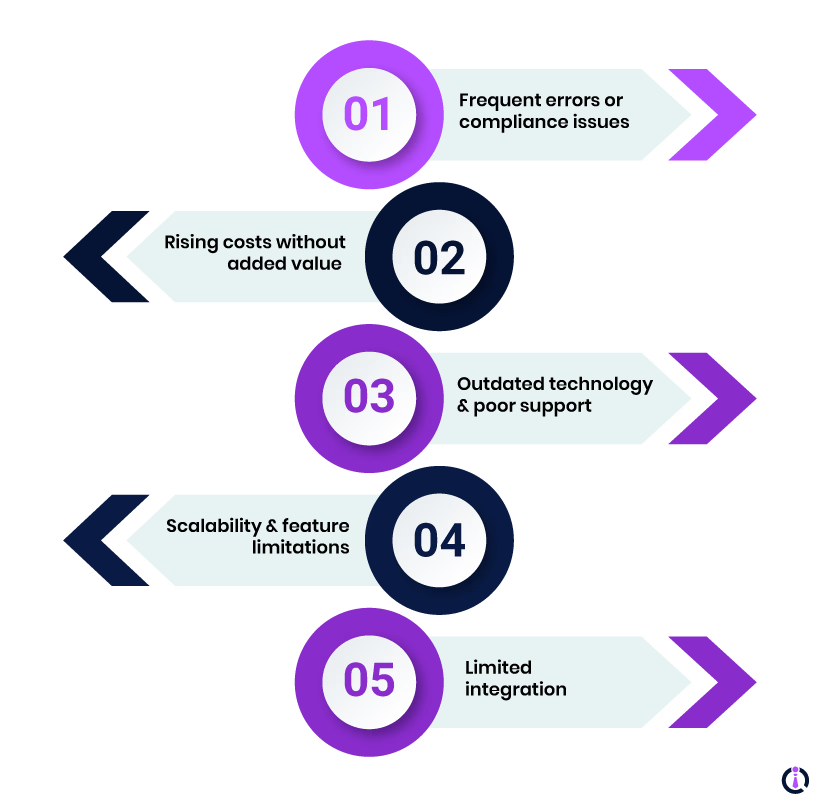
Many businesses reach a point where their current payroll solution just isn’t cutting it. Common reasons for switching include:
- Frequent errors or compliance issues: Mistakes can lead to fines and frustrated staff.
- Rising costs without added value: Paying more for the same or fewer features.
- Outdated technology and poor support: Clunky systems and slow responses cost time and productivity.
- Scalability and feature limitations: Unable to grow or adapt as your business evolves.
- Limited integration with other tools: Payroll should work seamlessly with accounting, HR, and international payroll software.
Deciding to change payroll providers is about weighing benefits against the effort of switching. The right solution can streamline operations, improve compliance, and create a better experience for your employees.
When considering a switch, think in terms of:
| Consideration | Current provider | New provider | Benefits of switching |
Business efficiency gains vs. transition challenges | Manual processes, higher risk of errors, and slower payroll cycles | Automated workflows, reduced human error, faster processing | Saves time, reduces mistakes, frees HR/finance for strategic tasks |
Cost vs. ROI considerations | Lower upfront cost, but hidden inefficiencies and penalties | May have higher upfront cost but fewer errors and better reporting | Long-term savings, fewer penalties, better compliance, higher ROI |
Employee experience improvements | Limited access, more payroll errors, and delayed pay slip availability | Self-service portals, mobile access, and real-time pay slips | Builds trust, improves morale, and reduces employee inquiries |
1. Business Efficiency Gains vs. Transition Challenges
Switching payroll providers can feel daunting because migration involves planning, data transfer, and testing. But the right provider can automate repetitive tasks, reduce human error, and speed up payroll processing.
The short-term effort of migration is usually outweighed by long-term efficiency gains — less manual work, fewer delays, and more time for strategic tasks like budgeting or HR planning.
2. Cost vs. ROI Considerations
- Upgrading to modern small business payroll software may come with a higher upfront cost, but it often pays for itself over time. Fewer mistakes mean fewer penalties, less time spent correcting errors, and more accurate reporting for compliance.
- When you measure the return on investment — time saved, errors avoided, and employee satisfaction — it’s easier to see that a switch can be financially worthwhile.
3. Employee Experience Improvements
Payroll mistakes frustrate your employees and can even impact morale. A smooth, accurate payroll process builds trust and confidence in your business.
Modern providers often offer self-service portals, mobile access, and real-time pay slip viewing, giving employees control and transparency. This reduces questions and complaints, freeing your HR and finance teams to focus on bigger-picture priorities.
Timing a payroll provider switch is crucial to minimize disruption and ensure smooth payroll automation. Choosing the right moment can save you from headaches like missed payments, errors, or compliance issues.
Here are your options:
- Beginning of the year: Starting fresh after year-end closes allows for a clean break with tax filings, W-2 and 1099 reporting, and annual adjustments like Social Security and Medicare contributions.
- Mid-year or mid-quarter considerations: Switching mid-year is possible but requires careful planning to avoid overlapping reporting periods or duplicate submissions to the IRS or state tax agencies.
- Payroll cycle alignment: Coordinate the switch with your existing payroll cycles (weekly, biweekly, or monthly) to reduce disruption and maintain accurate records for employees and tax authorities.
Before making the leap, understanding what matters most in a payroll solution ensures the transition is worthwhile and smooth. Evaluating cost, compliance, support, and system compatibility ensures a smoother transition and long-term efficiency. Here’s a closer look at factors you should consider.
Cost, Compliance, and Support
These are the three main areas to consider when changing payroll providers. Here’s what you should pay attention to:
- Cost: Look beyond monthly fees. Factor in setup costs, migration charges, and potential savings from automation.
- Compliance: Ensure the provider is up-to-date with U.S. employment law, IRS requirements, and Fair Labor Standards Act (FLSA) rules. Mistakes in federal or state tax withholding, Social Security, Medicare, or unemployment contributions can lead to penalties.
- Support: Reliable customer service, onboarding assistance, and training are essential to avoid errors during migration and ongoing payroll operations.
Factors To Consider When Switching Payroll Software Mid-Year
Making a payroll switch mid-year can be tricky, so it requires extra attention to detail. Careful planning helps prevent errors, ensures compliance, and keeps employees’ pay accurate throughout the transition.
Key steps include:
- Verifying that the cumulative payroll data is correctly transferred
- Ensuring the new system aligns with IRS and state payroll reporting requirements
- Planning for transitional adjustments to benefits, deductions, and leave accruals
Contract Terms, Exit Clauses, and Data Ownership
Before making the move, carefully review your current provider’s contract. Look at notice periods and termination fees to avoid unexpected costs. Understand their data retention policies and confirm how your payroll history will be delivered.
And most importantly, ensure full ownership and access to employee and payroll data, which is critical for migration accuracy, ongoing compliance, and maintaining continuity in payroll operations.
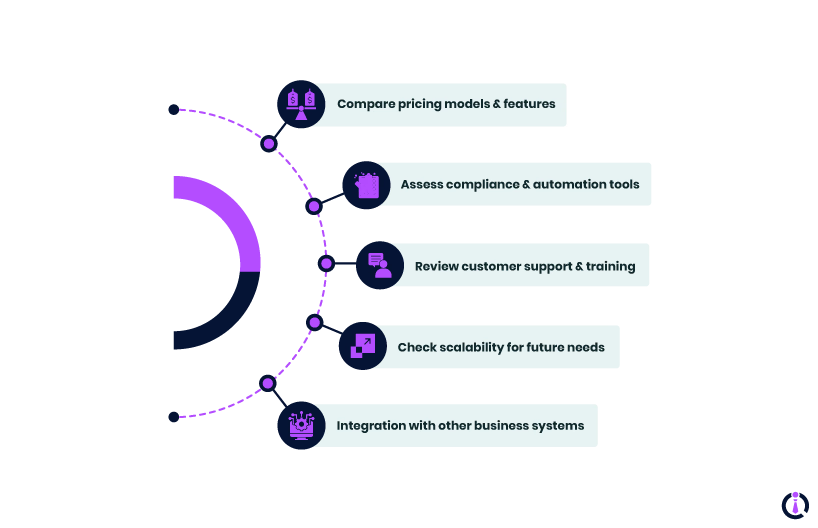
Choosing a payroll provider is more than picking a popular name; it’s about finding a solution that fits your business today and can grow with you tomorrow.
Here’s what you should consider:
- Compare pricing models and features: Flat fees vs. per-employee pricing; consider automation features and reporting capabilities.
- Assess compliance and automation tools: Check for IRS reporting, automated tax filings, and compliance with the FLSA and state wage laws.
- Review customer support and training: 24/7 support, dedicated account managers, and online resources can save time and stress.
- Check scalability for future needs: Can the system handle growth, new locations, or additional employee types?
- Integration with other business systems: Seamless connection with accounting software, HR apps, or international payroll software reduces manual work and errors.
Before making the switch, it’s important to ask potential providers the right questions to avoid surprises:
| Question | Why it matters |
| What onboarding support do you provide? | Step-by-step guidance, training, and a dedicated account manager can make the migration smoother. |
| How is employee data migrated and secured? | Ensures robust encryption and compliance with IRS and state data protection requirements. |
| Are there hidden or additional fees? | Avoid surprises by checking setup costs, migration charges, or ongoing support fees. |
| How do you handle tax filings during the transition? | Ensures IRS and state filings remain accurate to prevent penalties. |
| What integrations are supported? | Confirms compatibility with accounting, HR, or benefits platforms to reduce manual work. |
| How do you handle ongoing compliance updates? | Ensures the provider stays current with federal and state laws like FLSA, Social Security, and unemployment regulations. |
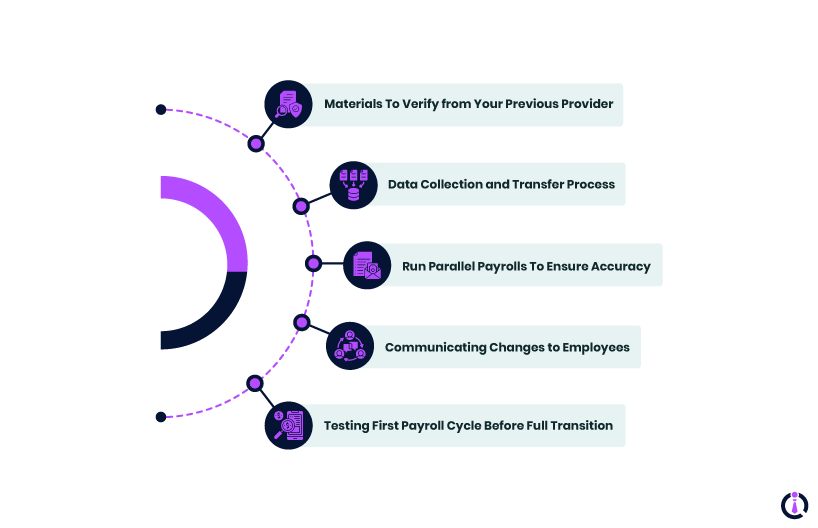
Switching payroll providers may feel complex, but breaking it down into clear steps makes the process manageable and ensures accuracy. From gathering records to testing your first payroll cycle, careful planning minimizes errors and keeps employees happy.
1. Materials To Verify from Your Previous Provider
Before moving, confirm you have complete payroll records, including W-2s, 1099s, tax filings, employee benefits deductions, and leave accruals. Having these verified upfront prevents missing data and ensures a smoother migration.
2. Data Collection and Transfer Process
Gather all employee and payroll data in a consistent, organized format. Ensure the new provider’s system can import it accurately and use secure transfer methods. Double-check transferred data for errors to avoid payroll mistakes.
3. Run Parallel Payrolls To Ensure Accuracy
Process at least one payroll cycle on both the old and new systems. Compare results to identify discrepancies, correct errors, and validate calculations before fully switching over.
4. Communicating Changes to Employees
Inform employees about upcoming payroll changes, new systems or portals, and any adjustments in schedules. Providing FAQs and support contacts builds trust and minimizes confusion during the transition.
5. Testing First Payroll Cycle Before Full Transition
Run a test payroll on the new system to confirm accurate salaries, deductions, and tax withholdings. This practice ensures compliance with IRS and state requirements and catches any lingering issues before the official payroll.
Even with careful planning, businesses often encounter hurdles during payroll outsourcing or switching providers. Being aware of these common challenges helps you prepare and minimize disruptions:
- Data migration errors: Missing or misformatted records can cause payroll mistakes or compliance issues.
- Timing mismatches with pay cycles: Overlapping cycles or misaligned schedules can delay employee payments.
- Employee confusion or mistrust: Lack of clear communication can lead to frustration or questions.
- Integration breakdowns with HR/accounting systems: Payroll must sync with benefits, accounting, and reporting systems to avoid extra manual work.
- Compliance missteps: Failure to correctly apply federal and state tax rules, wage laws, or reporting requirements can result in penalties and fines.
Best Practices for a Smooth Transition
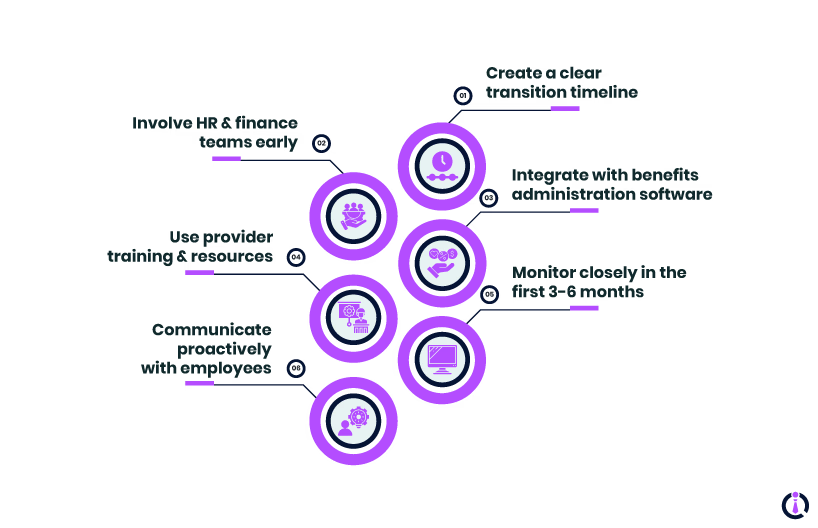
Following proven strategies can make switching payroll providers much smoother and reduce the risk of errors. Here are some best practices for seamlessly switching payroll companies:
- Create a clear transition timeline: Map out each step, from data migration to parallel payroll runs, with deadlines to keep everyone on track.
- Involve HR and finance teams early: Their input ensures accurate data, compliance, and smooth coordination across departments.
- Integrate with benefits administration software: Ensure payroll works seamlessly with benefits, retirement plans, and other HR systems to reduce manual work and errors.
- Use provider training and resources: Take advantage of onboarding guides, tutorials, and support to get up to speed quickly.
- Monitor closely in the first 3-6 months: Track payroll accuracy, tax filings, and employee feedback to catch issues early.
- Communicate proactively with employees: Keep staff informed about changes, new portals, and schedules to maintain trust and minimize confusion.
Streamline Your Payroll With FindHR Experts
Finding the right payroll software doesn’t have to be a stressful guessing game. With the right provider, you can streamline payroll, stay compliant with IRS and state regulations, and give your employees a seamless experience — all while saving time and reducing errors. Careful planning, clear communication, and the right tools make switching providers a smooth, manageable process.
At FindHR, we help businesses identify payroll solutions that fit their size, needs, and growth plans. From small startups to expanding enterprises, our experts guide you every step of the way. Talk to our experts today and make payroll headaches a thing of the past.
Frequently Asked Questions About Switching Payroll Providers
Switching payroll providers can feel overwhelming, but knowing the answers to common questions makes the process much smoother. Here’s what you need to know.
How Long Does It Usually Take To Switch Payroll Providers?
Most switches take 4-8 weeks, depending on the complexity of your payroll, the number of employees, and the data migration process. Careful planning can speed things up.
Can Payroll Be Switched Mid-Year or Mid-Quarter?
Yes, but extra care is needed to ensure accurate cumulative payroll data and proper IRS and state filings. Running parallel payrolls helps catch discrepancies.
What Happens to Tax Filings When Switching Providers?
The new provider should take over IRS and state payroll reporting from the transition date. Confirm that prior filings are complete and that cumulative totals are accurate to avoid penalties.
Is Employee Pay Affected During the Transition?
If planned carefully, employees should not experience delays. Running parallel payrolls and clear communication help ensure timely, accurate payments.
How Do I Avoid Hidden Fees When Switching Payroll Providers?
Ask about setup costs, migration fees, support charges, and per-employee pricing upfront. Request a written breakdown of all potential costs before signing a contract.